


Iconic green buildings: Olympic House
What makes a green building "iconic"? Is it arresting design that also raises the bar with energy efficiency? Is it the "firsts," the superlatives, the leaders in a given market? The instantly recognizable landmarks? The carbon reduction champions? Both in the U.S. or around the world, USGBC has always celebrated the unique green buildings—certified with LEED, SITES and other rating systems—that make the spaces in which we live, work and play truly memorable.
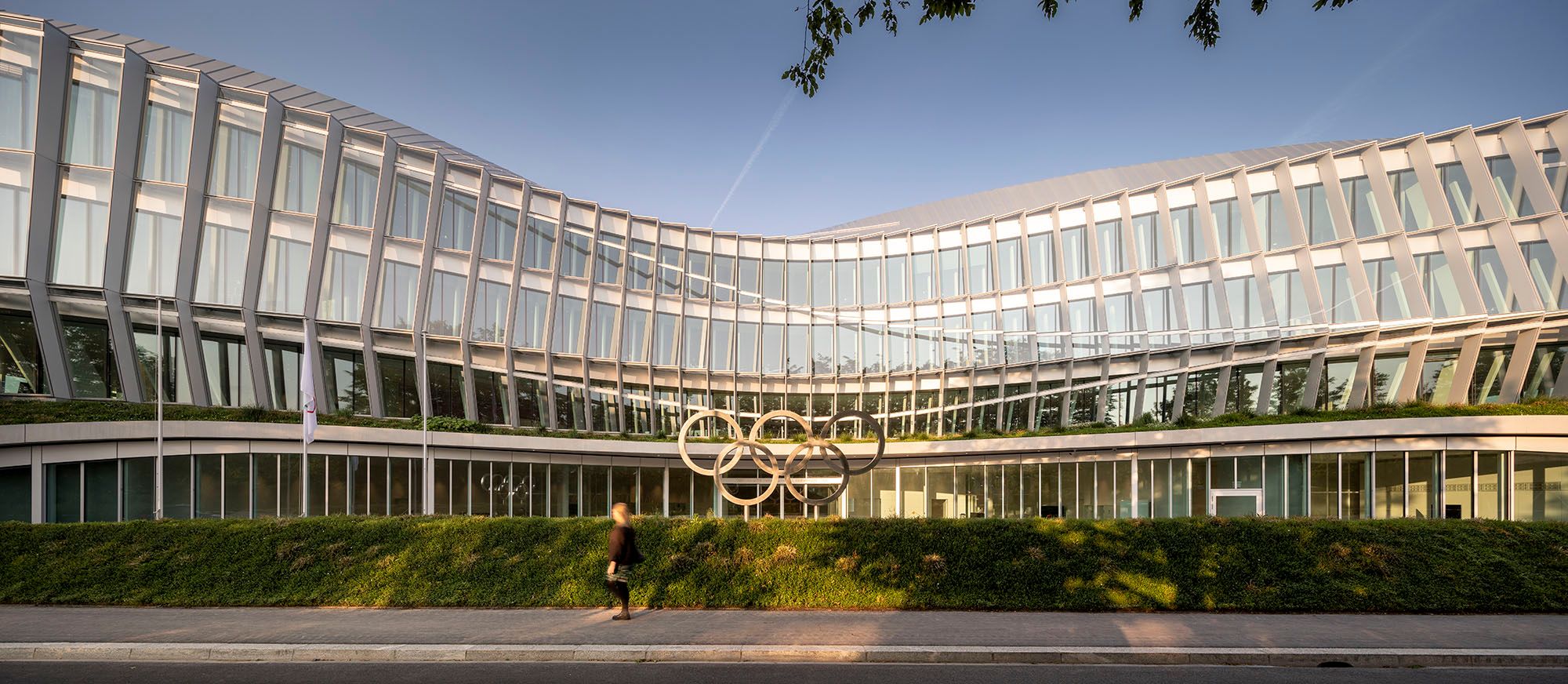
Olympic House - Home of the Olympic Movement and International Olympic Committee (IOC) headquarters
Olympic House lives up to its name. In 2019, the headquarters of the International Olympic Committee (IOC) in Lausanne, Switzerland, which promotes the international sports competition known as the Olympic Games, became the first building in the nation to achieve Platinum certification under LEED v4—as well as achieving the superlative of the most points earned by any project under LEED v4 for Building Design and Construction at the time.
Sustainability: a marathon, not a sprint
Fast-forward to 2024: Just a few months before the Paris Games, the IOC announced its recertification under LEED v4.1 for Operations and Maintenance (O+M). Achieving Platinum a second time keeps Olympic House in the lead as one of the world's most sustainable buildings; with 82 points out of 100, the building achieved the highest score in Switzerland under the LEED O+M rating system. Recertification recognizes that ongoing maintenance and operations practices with existing buildings are essential to advancing our global sustainability goals.
A building that moves toward the future
The collaboration of Danish architecture firm 3XN and Swiss architecture firm Itten+Brechbuhl resulted in a building with an undulating façade that conveys "the energy of an athlete in motion," according to 3XN. Itten+Brechbul describes Olympic House as evoking " mobility, flexibility, and an orientation toward the future."
As befits an organization that promotes sports and athleticism in society, fostering active, healthy lifestyles for staff is a core value for the IOC. Subsidies, infrastructure and a flexible work structure are offered to encourage sustainable mobility and work-life balance. These measures, says the IOC, have further contributed to reducing carbon emissions and promoting sustainable practices among building occupants. Over 60% of staff members walk, bicycle or take public transportation to work.
With attention to high indoor air quality and pervasive natural light, the indoor environment is meant to promote health and wellness for all staff. Ninety percent of regularly occupied spaces within Olympic House have access to outdoor views, and landscaped terrace spaces offer people the chance to enjoy nature.
Olympic House by the numbers:
- 25,000 square meters
- 4 floors plus a basement and roof terrace
- 500 regular occupants
- 15,000 visitors per year
- 60% of the property is open space, of which 50% is vegetated
- 80% of the investment in the building was spent locally
- 95% of the former IOC headquarters was reused or recycled
For the LEED O+M recertification, building performance was assessed across several areas that undergo regular monitoring, such as air quality, energy and water use, user comfort, staff commuting and waste management. The optimization measures that IOC implemented during Olympic House’s initial design and construction, as well as since, have helped achieve significant reductions in electricity and water consumption. The IOC has reduced its energy use by 50% per square meter and its use of potable water per occupant by 50–75%, compared to its previous headquarters.
Through strategies such as making fewer trash bins available, reducing single-use plastics use and promoting recycling practices among staff, the IOC achieved a 50% decrease in nonrecyclable office waste per employee since 2019. Food waste was also reduced over 50%, in part due to instituting the sale of leftover food from the restaurant on site.
Continuing to operate Olympic House sustainably is one aspect of the IOC’s carbon emissions reduction efforts and goals for global sustainability. For the Paris Games, for example, the organization set a goal of cutting the event's carbon footprint by half compared to London 2012 and Rio 2016—a goal it surpassed, with a 54% improvement. Reaching this target was made possible by avoiding, reducing or controlling impacts in the areas of construction, operations and travel.
As organizations all over the world use LEED to scale transformation of the built environment, minimize climate impacts and enhance the well-being of people and the environment, Olympic House raises its Platinum medal as an iconic example.
Source: USBGC
)
)
)